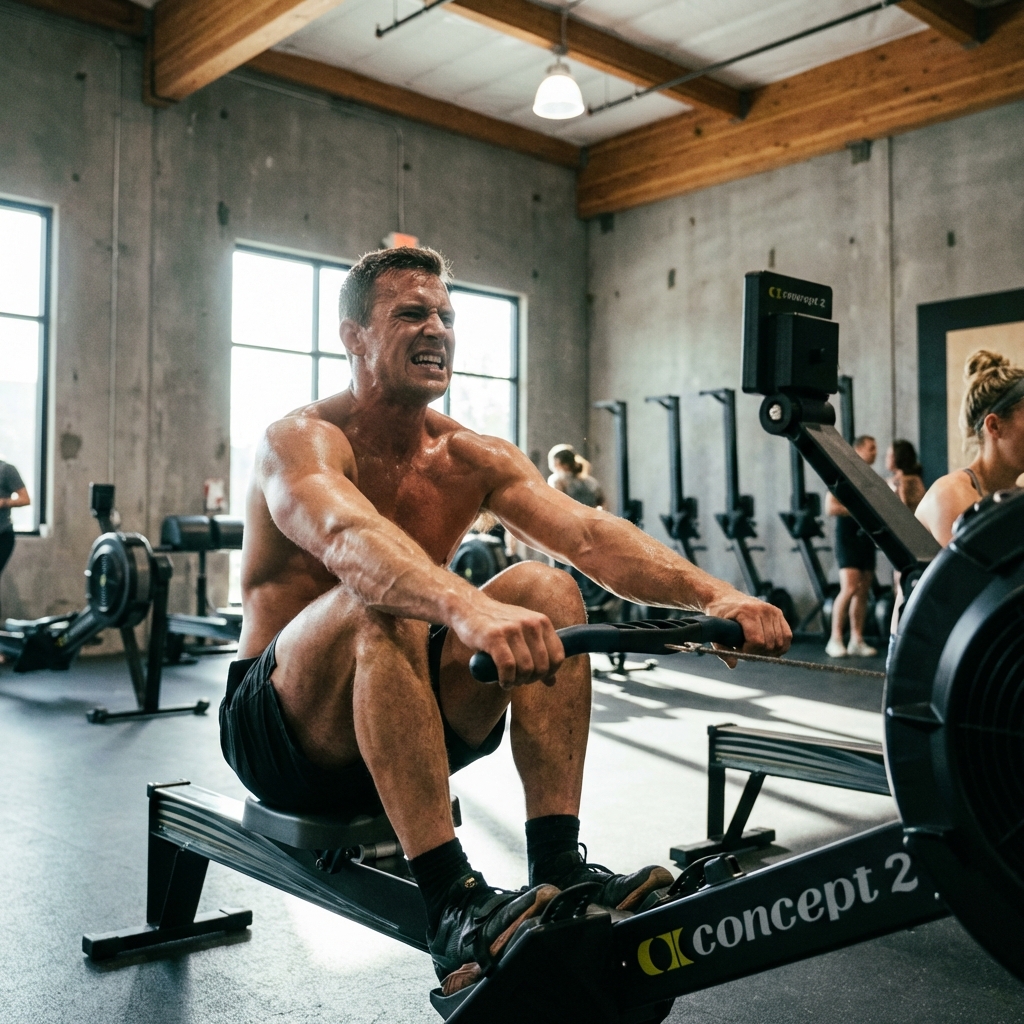
Cycling Power to Weight Ratio Explained (Watts/kg)
In modern cycling, one number rules them all: Watts per Kilogram (W/kg). Learn what it is, why it matters for climbing, and how to improve yours to drop your riding buddies on the next hill.
Azeem Iqbal
Performance Analyst
Cycling Power to Weight Ratio Explained (Watts/kg)
If you’ve spent any time on Zwift, Strava, or watching the Tour de France, you’ve heard the term Watts per Kilogram (W/kg). It is the gold standard for measuring climbing performance and comparing riders of different sizes. But what does it actually mean, and how does your number stack up against the competition?
This guide breaks down the math, the benchmarks, and the training strategies to help you become a mountain goat.
The Math Behind the Mountain
Cycling helps us understand physics intuitively.
- On the flats, the main force slowing you down is wind resistance (drag). This roughly correlates to your frontal area. A larger rider produces more power but also pushes more wind.
- On the climbs, the main force is gravity. Gravity pulls on mass. The more mass you have to lift up the hill, the more energy it costs.
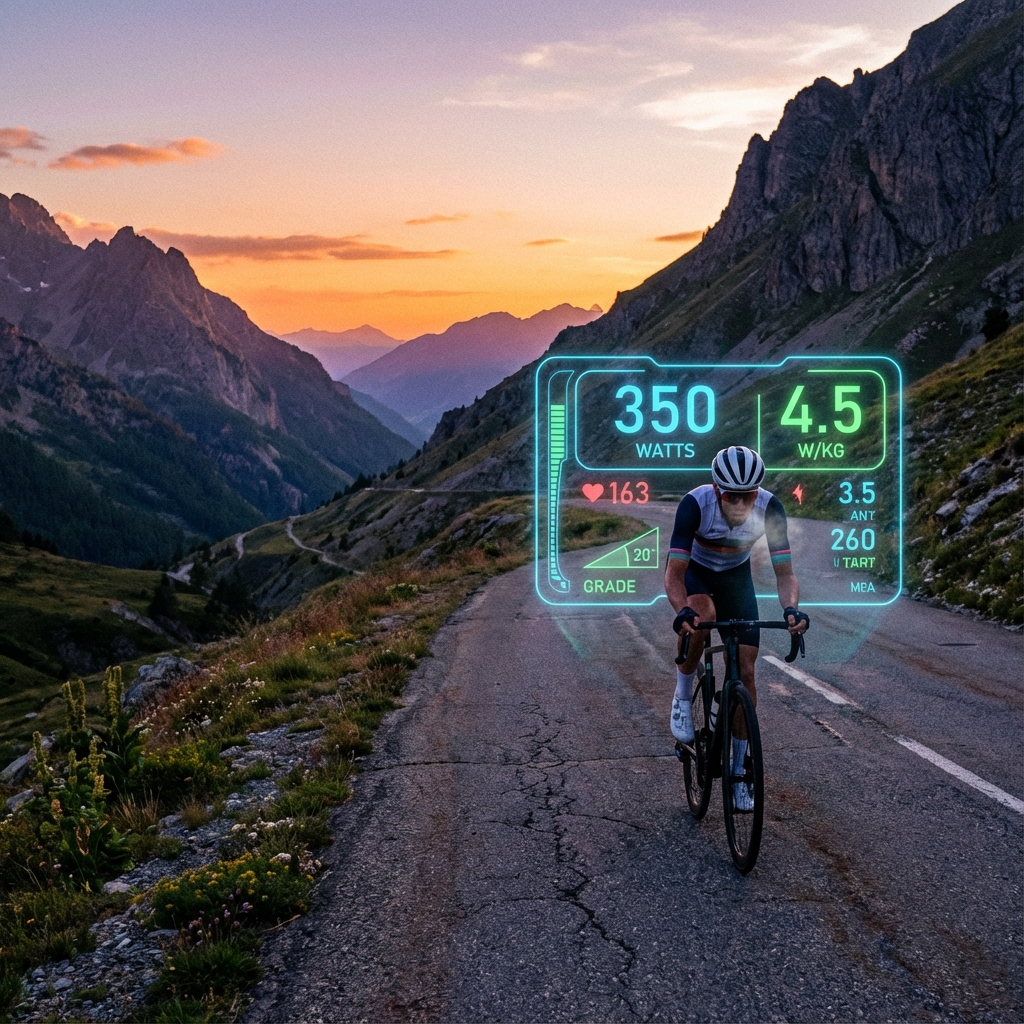
This is why a 60kg rider pushing 300 Watts will absolutely drop a 90kg rider pushing 350 Watts on a steep Alpine pass.
- Rider A: 300W / 60kg = 5.0 W/kg
- Rider B: 350W / 90kg = 3.88 W/kg
Rider A is bringing significantly more power to the fight against gravity, relative to their size.
Functional Threshold Power (FTP)
To calculate your ratio effectively, you need a baseline power number. We use FTP (Functional Threshold Power), which is the theoretical maximum power you can sustain for one hour.
How to find it:
- Ramp Test: Available on platforms like Zwift or TrainerRoad.
- 20-Minute Test: Ride as hard as you can for 20 minutes. Multiply your average power by 0.95.
- eFTP: Platforms like Intervals.icu can estimate it from your ride data.
Benchmarks: Where Do You Stand?
Dr. Andrew Coggan created the classic power profile chart which is widely used to categorize cyclists. Here is a simplified version based on FTP (60-minute power):
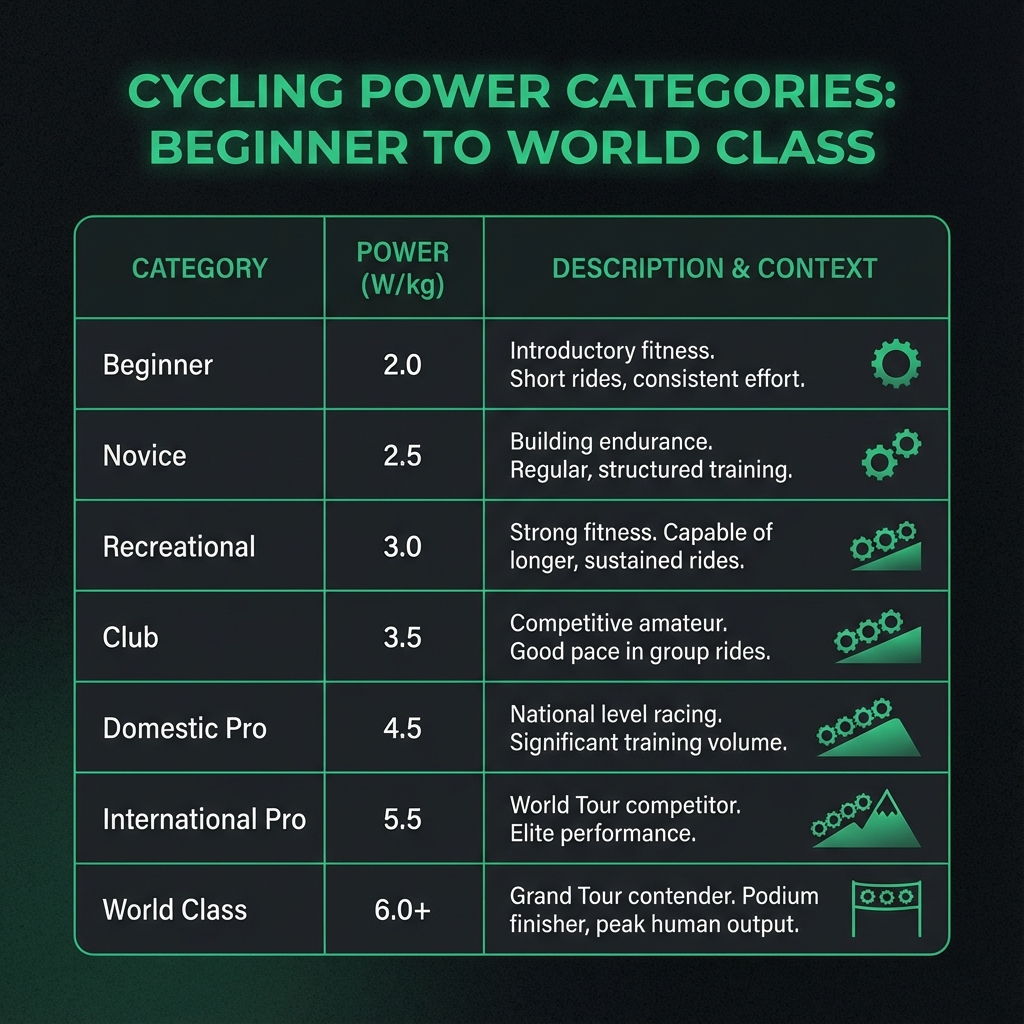
- Untrained (1.5 - 2.0 W/kg): You rarely ride or are just starting out.
- Cat 5 / Novice (2.0 - 2.5 W/kg): You ride regularly (2-3 times a week) and are building fitness.
- Cat 4 / Recreational (2.5 - 3.2 W/kg): You are fit, can handle long club rides, and drop casual riders.
- Cat 3 / Competitive (3.3 - 4.0 W/kg): You are a strong local racer. You train with structure (intervals).
- Cat 1/2 / Elite (4.0 - 5.0 W/kg): You are at the top of the amateur food chain. You win state races.
- Professional (5.5 - 6.5 W/kg): You are seeing World Tour numbers. You climb mountains at speeds others sprint at.
Flat vs. Hilly Terrain
It is crucial to understand that W/kg is primarily a climbing metric.
On a flat time trial, raw watts matter more. A large rider putting out 400 Watts (even at only 4.0 W/kg) will often beat a tiny rider putting out 250 Watts (at 5.0 W/kg) on a flat road. The raw power overcomes air resistance better. But as soon as the road tilts up past 5-6%, the W/kg advantage takes over.
Improving Your W/kg
Since it is a ratio, you can improve it in one of two ways (or both):
1. Increase the Numerator (Power)
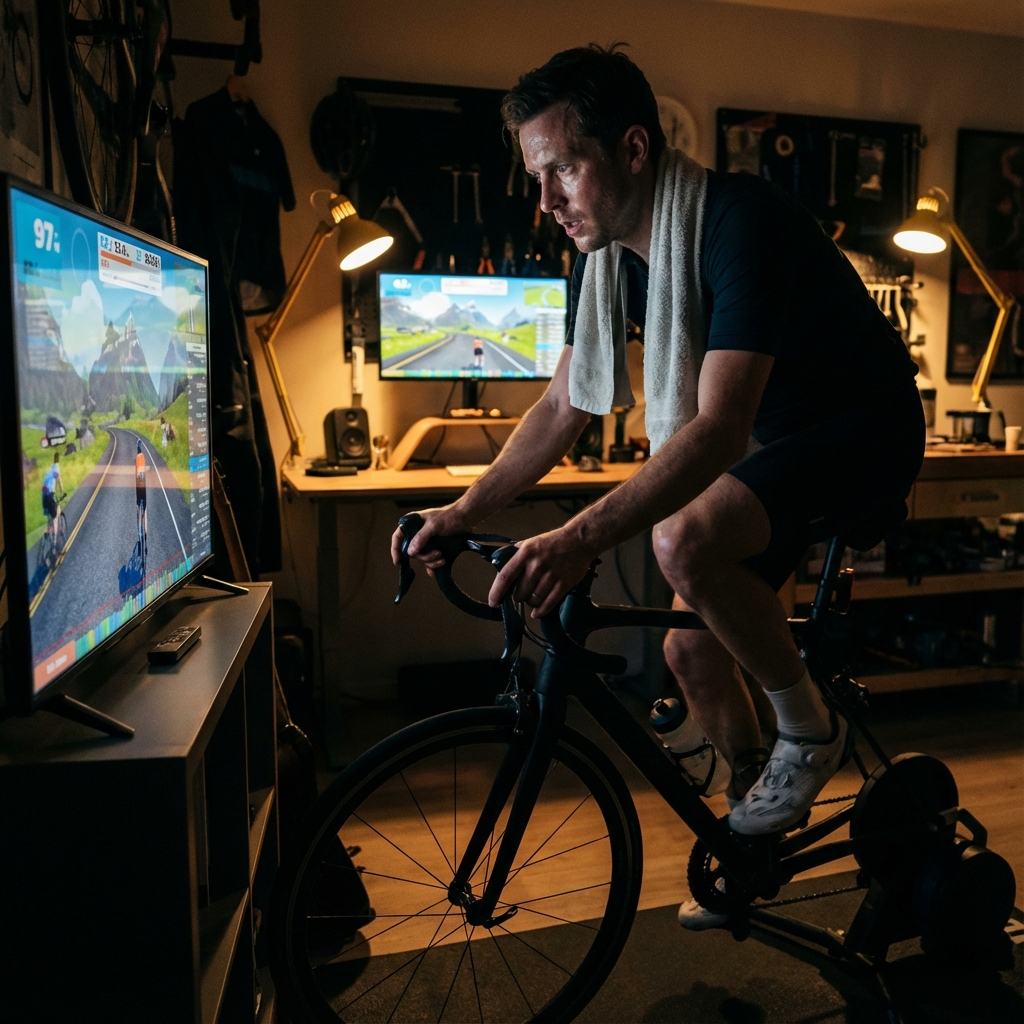
This is the fun part—training!
- Sweet Spot Training: Long intervals (15-20 mins) at 88-93% of your FTP.
- VO2 Max: Short, agonizing intervals (3-5 mins) at 110-120% of FTP to raise your ceiling.
- Consistency: Riding 4-5 times a week consistently beats riding once a week for 6 hours.
2. Decrease the Denominator (Weight)
This is the hard part—diet.
- Body Composition: Losing body fat while maintaining muscle mass is the goal. Crash diets destroy muscle, lowering your power and your weight, resulting in no net gain in W/kg.
- Bike Weight: Buying a lighter bike helps, but it’s expensive. Losing 1kg of body weight is free; saving 1kg on a bike might cost $2,000. Focus on the body first.
Summary
Watts per Kilogram is the ultimate equalizer in cycling. It tells the truth about your climbing ability regardless of your size. By measuring your FTP and weight regularly, you can track your fitness accurately. Just remember: chasing the highest number is great, but riding your bike and enjoying the view from the top of the mountain is even better.
? Frequently Asked Questions
What is a good Watts/kg for a beginner cyclist?
How do I calculate my cycling power to weight ratio?
Is absolute power or power-to-weight more important?
What W/kg do Tour de France riders sustain?
Does bike weight count in the calculation?

About Azeem Iqbal
We are dedicated to providing accurate tools and information to help you optimize performance and understand power-to-weight metrics.