Go-Kart Power to Weight Ratio: Why 9 HP Feels Like a Supercar
Ever wondered why a rental kart feels so fast? We break down the physics of karting, comparing it to road cars and analyzing how weight reduction is the ultimate tuning tool.
Azeem Iqbal
Performance Analyst
Go-Kart Power to Weight Ratio: Why 9 HP Feels Like a Supercar
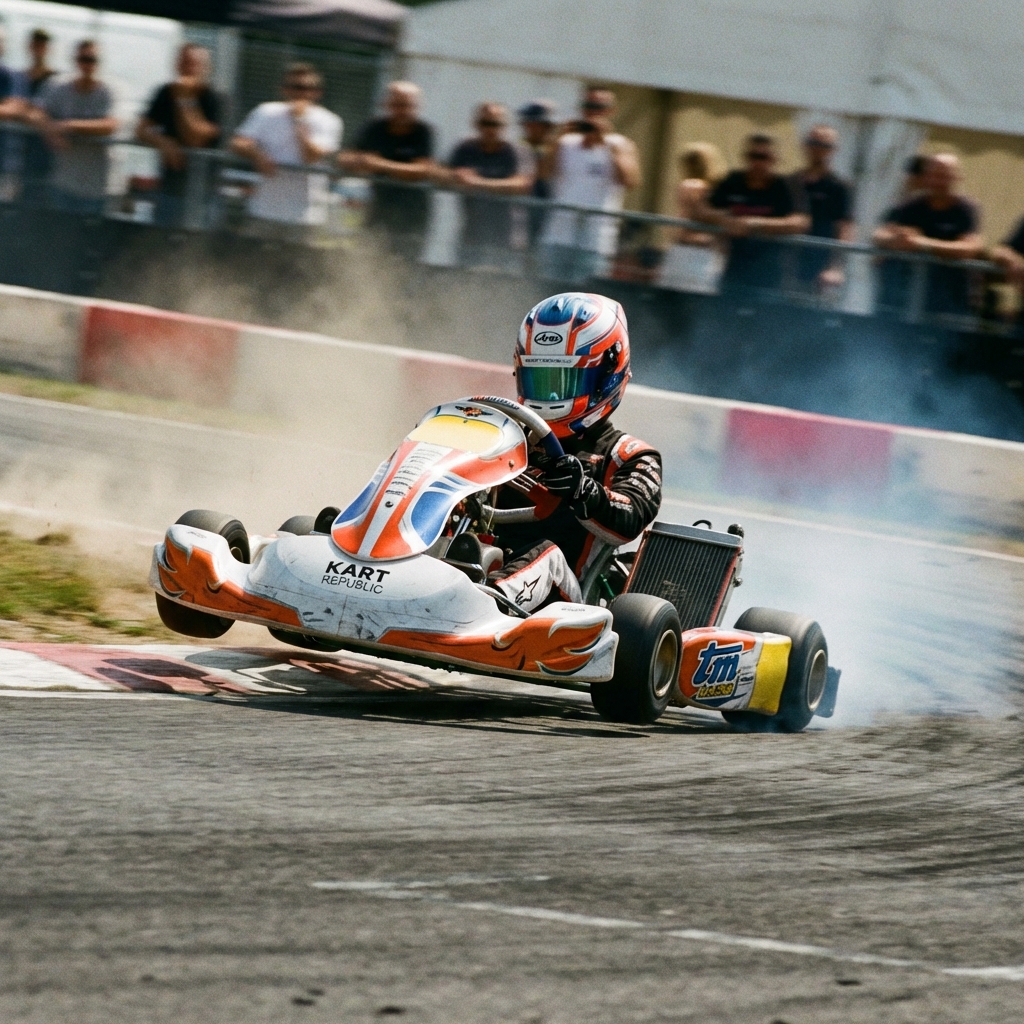
You are sitting inches off the ground. The engine is screaming at 12,000 RPM. The wind is tearing at your helmet. You feel like you are doing 200 mph, but you check the telemetry later… you were doing 45 mph.
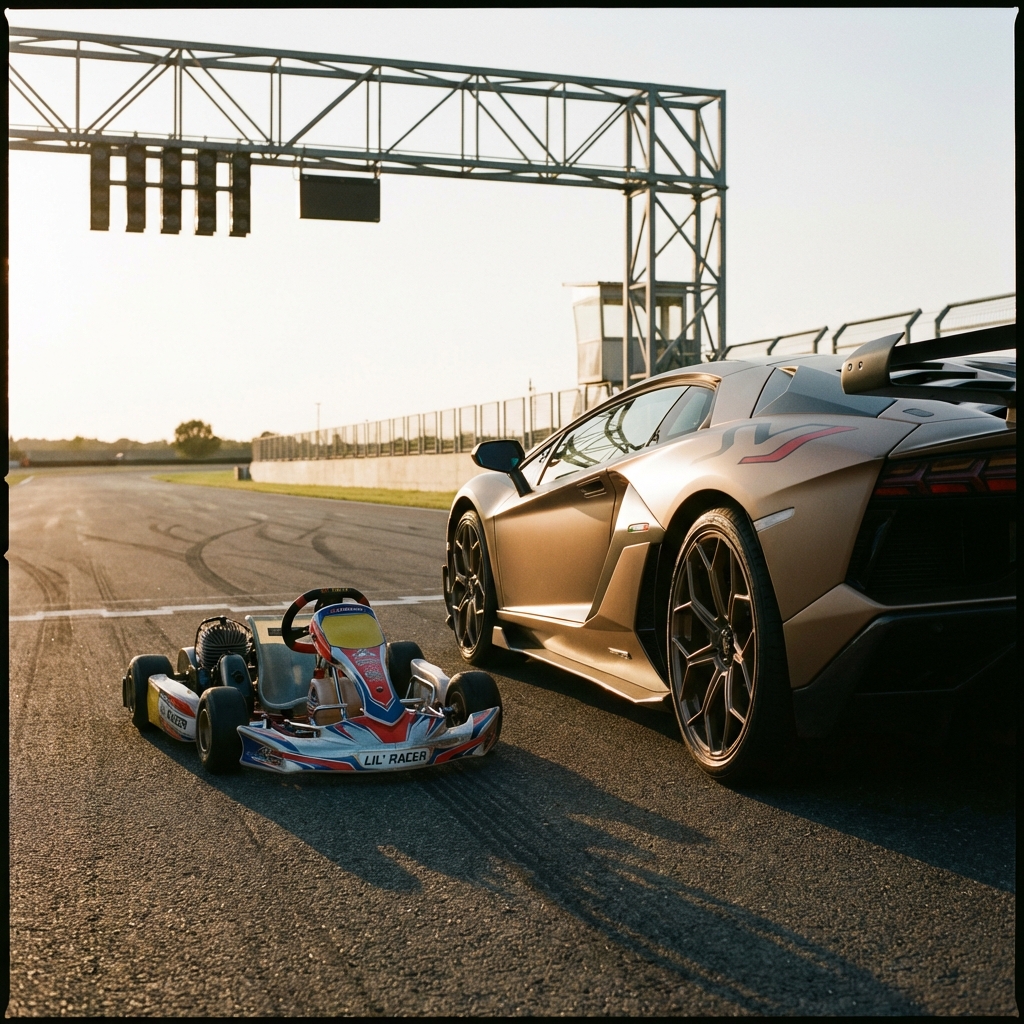
This is the magic of Go-Karting. It is the purest distillation of motorsport physics. While casual observers mock the “lawnmower engines,” the math tells a different story. In the world of karting, Power to Weight Ratio is not just a spec—it is the entire experience.
The Physics of Small Numbers
To understand why karts are fast, we have to look at the denominator: Weight. A typical adult go-kart weighs roughly 160 lbs (72 kg) without the driver. Add a 170 lb driver, and the Total Race Weight is 330 lbs (150 kg).
Let’s compare three vehicles:
- Rental Kart (9 HP): Ratio = 36.6 Lbs/HP
- Toyota Corolla (169 HP): Ratio = 18.3 Lbs/HP
- Rotax Racing Kart (28 HP): Ratio = 11.7 Lbs/HP
Wait, the Corolla has a better ratio than the rental kart? Why is the kart more fun? Perception of Speed and Cornering Forces. Because the kart has no suspension and sits on the floor, you feel every vibration. But more importantly, the low weight allows for instantaneous direction changes that a 3,000 lb car simply cannot execute.
The Rotax Factor: When Karts Get Serious
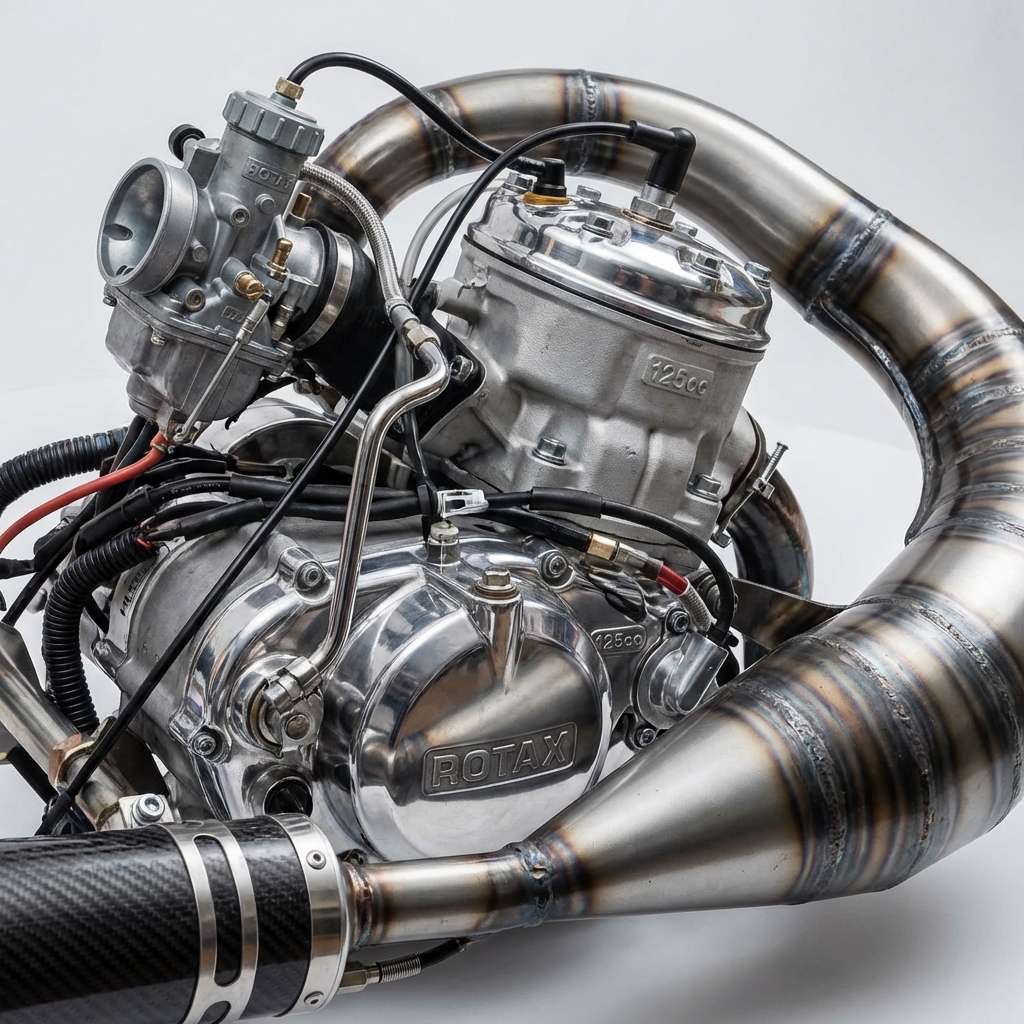
Step up from “Rental” to “Club Racing,” and the numbers get scary. A Rotax MAX 125cc 2-stroke engine produces roughly 28-30 HP.
- Total Weight: ~360 lbs (with driver).
- Power: 30 HP.
- Ratio: 12 Lbs/HP.
This puts a club-level go-kart in the same territory as a Honda S2000 or Subaru WRX STI. But unlike those cars, the kart has no body roll. It converts that power into acceleration instantly. 0-60 mph happens in roughly 4.0 seconds—comparable to a BMW M4, for a fraction of the price.
Shifter Karts: The Giant Killers
At the top of the food chain are KZ Shifter Karts. These have 6-speed gearboxes and incredible brakes.
- Power: ~45-50 HP.
- Weight: ~385 lbs (with driver).
- Ratio: 7.7 Lbs/HP.
7.7 Lbs/HP is the same ratio as a Chevrolet Corvette Z06 or a Porsche 911 GT3. Because of this insane ratio, a shifter kart will accelerate 0-60 mph in under 3 seconds. On a tight circuit with lots of corners, a shifter kart will lap faster than a million-dollar hypercar because it carries zero inertia into the braking zones.
Driver Weight: The “Ballast” Factor
In no other motorsport is the driver’s diet as critical as karting. In F1, the car weighs 798kg. The driver is ~10% of the package. In Karting, the kart weighs 75kg. The driver weighs 75kg. The driver is 50% of the package.
If you gain 5kg (11 lbs), you have increased the total vehicle mass by nearly 3.5%. In a 9 HP kart, that is devastating.
- Lighter Driver: Accelerates faster out of every corner.
- Heavier Driver: Has more grip (potentially) but suffers massive penalties in acceleration and braking distance.
This is why professional karting series have strict “Minimum Weight” rules. If you are too light, you must bolt lead weights (ballast) to your seat to make it fair.
The “Solid Axle” Effect
Power to weight isn’t just about straight lines; it turns the kart. Karts have a Solid Rear Axle. Both rear wheels spin at the same speed. This is a problem for cornering, where the outside wheel needs to travel further than the inside wheel. To turn a kart, you must Lift the Inside Rear Wheel off the ground (Weight Jacking).
- This relies on Center of Gravity (CG).
- A lighter kart/driver combo can be thrown around more aggressively to achieve this “tripod” effect.
- If the ratio of “Grip to Weight” is wrong, the kart will just slide (understeer) or hop, killing your lap time.
Conclusion
The next time you are at a local “K1 Speed” or outdoor track, remember the physics at play. You aren’t just driving a slow toy; you are piloting a machine that exploits the ultimate loophole of performance: Extreme Lightness. While your friend in the 400HP Mustang might beat you on the highway, on the track, the Power to Weight ratio of a proper racing kart remains the undefeated king of thrill-per-dollar.
? Frequently Asked Questions
What is the power to weight ratio of a go-kart?
How much faster is a 2-stroke kart?
Does driver weight matter in rental karts?
What is weight jacking?
How can I improve my rental kart lap time?
Is a shifter kart faster than a supercar?

About Azeem Iqbal
We are dedicated to providing accurate tools and information to help you optimize performance and understand power-to-weight metrics.