Power to Weight Ratio in Formula 1 vs Road Cars
How does a Formula 1 car compare to a Bugatti Chiron or a Honda Civic? We crunch the numbers to show why F1 engineering is in a league of its own.
Azeem Iqbal
Performance Analyst

Power to Weight Ratio in Formula 1 vs Road Cars
We often hear the term “Supercar” thrown around for vehicles like the Ferrari 488 or the Porsche 911 Turbo. We hear “Hypercar” for engineering marvels like the Bugatti Chiron or Koenigsegg Jesko. But sitting quietly above them all, laughing at the laws of physics, is the Formula 1 car.
To understand just how extreme F1 machinery is, we shouldn’t just look at top speed or horsepower. We need to look at Power to Weight Ratio (PWR).
The Contenders
Let’s break down the stats of four vehicles representing different tiers of automotive performance.
1. The Daily Driver: Honda Civic Touring
- Power: 180 hp
- Weight: 3,000 lbs (1.36 tonnes)
- PWR: 132 hp/ton
2. The Sports Car: Porsche 911 GT3 (992)
- Power: 502 hp
- Weight: 3,160 lbs (1.43 tonnes)
- PWR: 351 hp/ton
3. The Hypercar: Bugatti Chiron
- Power: 1,500 hp
- Weight: 4,400 lbs (1.99 tonnes)
- PWR: 753 hp/ton
4. The Formula 1 Car (2025 Spec)
- Power: ~1,050 hp
- Weight: 1,759 lbs (798 kg) - Minimum weight with driver
- PWR: ~1,315 hp/ton
The Results Analyzed
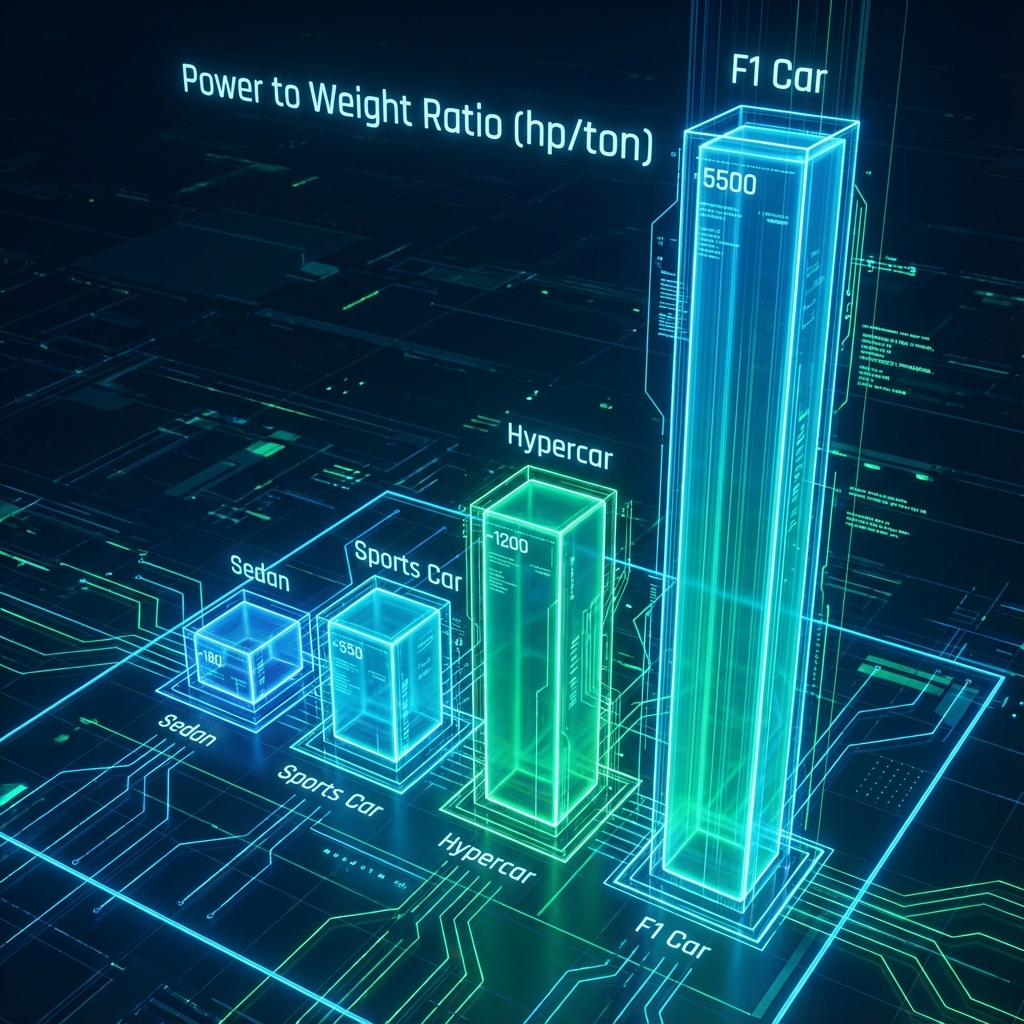
When you look at the raw horsepower, the Bugatti (1,500 hp) actually beats the F1 car (1,050 hp). But look at the PWR:
- The Bugatti is moving 2.9 lbs for every horsepower.
- The F1 car is moving just 1.6 lbs for every horsepower.
This means the F1 car isn’t just “a bit” faster. Dynamically, it is in a different universe. The Bugatti is a luxury missile; the F1 car is a fighter jet tied to the ground.
Why Weight Matters More Than Power
You might ask, “Why don’t they just give the Bugatti 3,000 horsepower?” The problem is inertia. Mass resists acceleration, but it also resists turning and stopping.
Braking
An F1 car can decelerate from 200 mph to 0 in about 4 seconds. The massive weight of a road car (even a hypercar) carries so much kinetic energy that stopping it requires football-field lengths of tarmac. The F1 car’s low mass allows the carbon-ceramic brakes to stop it instantly.
Cornering
This is the biggest differentiator. A 4,400 lb Bugatti is fighting centrifugal force in every corner. The tires have to work incredibly hard to keep that mass on the road. An F1 car, weighing less than half as much, puts far less strain on its tires laterally (before downforce is added), allowing it to change direction with violent agility.
The Engineering Behind the Featherweight
How do they get an F1 car so light?
- Carbon Fiber Everywhere: The “tub” (where the driver sits) is woven carbon fiber, lighter than steel but stronger.
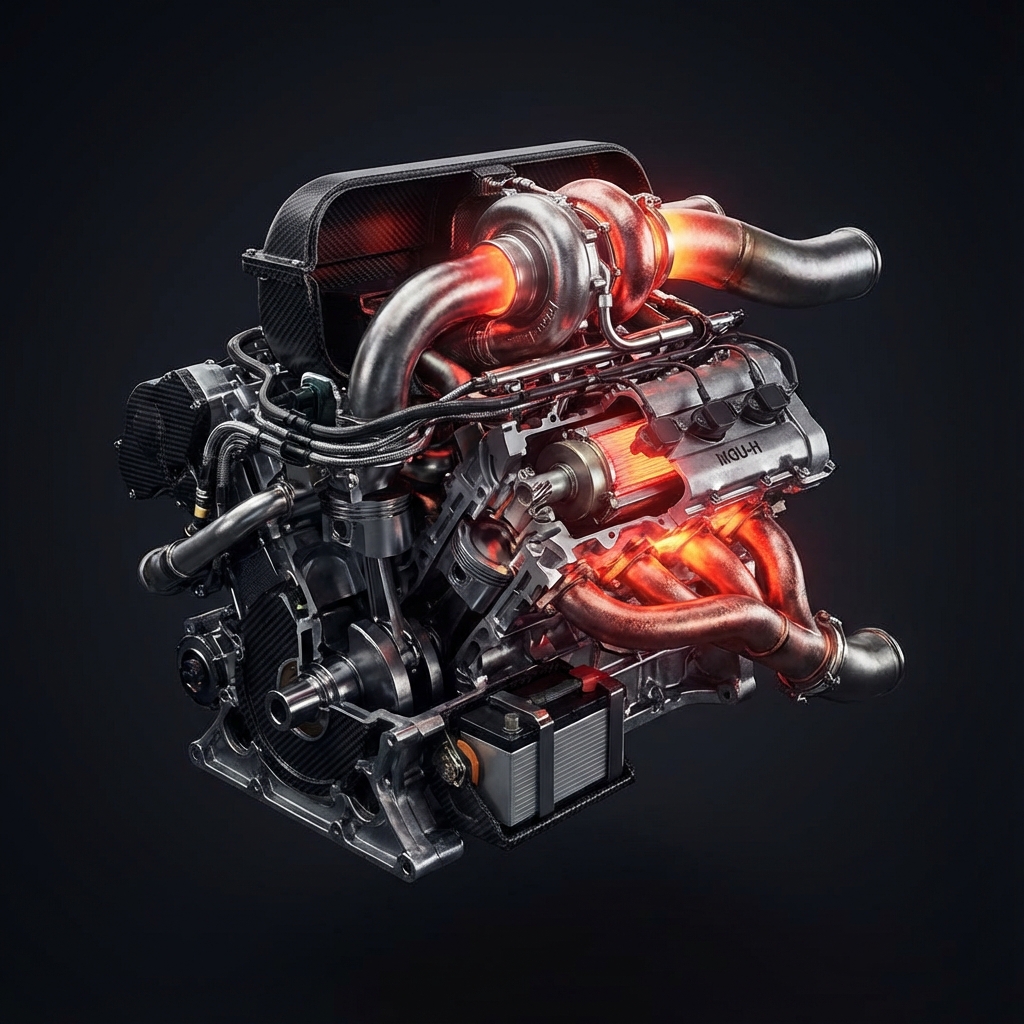
- Stressed Engine: The engine isn’t just bolted into the car; it is part of the chassis. The rear suspension bolts directly to the gearbox, which bolts to the engine. There is no subframe.
- Exotic Materials: Titanium gearboxes, magnesium wheels, and Inconel exhausts.
What About Downforce?
The secret weapon of F1 is downforce. At 150 mph, the wings and floor of an F1 car generate enough aerodynamic load to theoretically allow it to drive upside down. This “virtual weight” pushes the tires into the track, giving it grip as if it weighed 2 tonnes, but without the inertial penalty of actually weighing 2 tonnes.
- Straight Line: Lightweight helps acceleration.
- Corners: Downforce helps grip.
Conclusion
The next time you see a 1,000 hp Supra or a 2,000 hp electric hypercar on the internet, remember the power to weight ratio. Road cars, no matter how fast, are compromised by the need for luxury, safety, and durability. Formula 1 cars are compromised by nothing but the regulations. They remain the undisputed kings of efficiency and speed.
? Frequently Asked Questions
What is the power to weight ratio of an F1 car?
How much horsepower does an F1 car have?
Is an F1 car faster than a Bugatti Chiron?
Why are F1 cars so light?
How does a NASCAR compare to F1 in power to weight?

About Azeem Iqbal
We are dedicated to providing accurate tools and information to help you optimize performance and understand power-to-weight metrics.