Thrust to Weight Ratio: The Magic of Aviation and Rocketry
In the air and beyond, horsepower means nothing. It is all about Thrust to Weight. We explore how fighter jets defy gravity and how rockets escape it.
Azeem Iqbal
Performance Analyst
Thrust to Weight Ratio: The Magic of Aviation and Rocketry
On the ground, we talk about horsepower per ton. But once you leave the asphalt, the rules change. In the world of aviation and spaceflight, the metric of kings is Thrust to Weight Ratio (T/W).
It determines if a plane is a sluggish transport or a sky-shredding fighter. It determines if a rocket makes it to orbit or falls back to Earth in a ball of fire.
The Golden Number: 1.0
The most critical threshold in aerospace is 1.0.
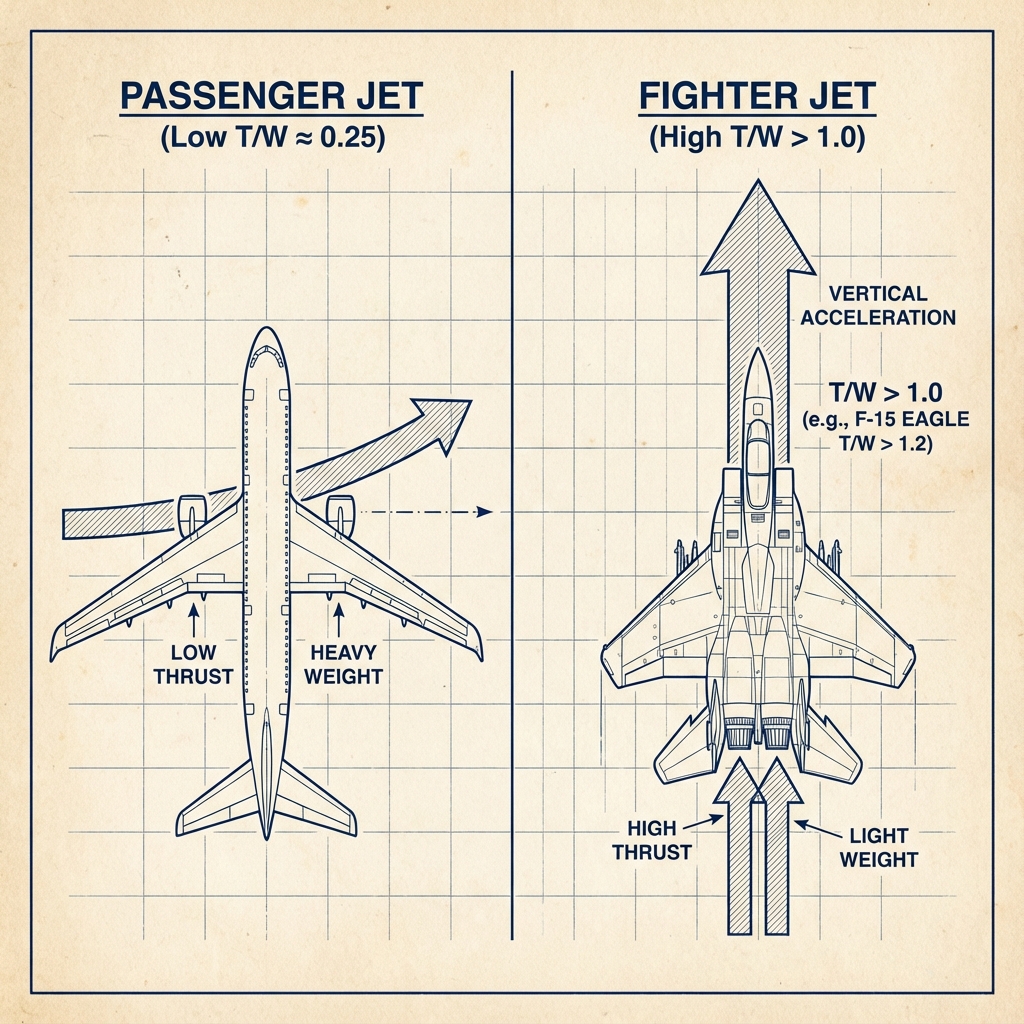
- T/W < 1.0: Gravity wins. The vehicle relies on wings (lift) to stay airborne. It cannot fly straight up without losing speed. (e.g., Passenger Jets, Cessnas).
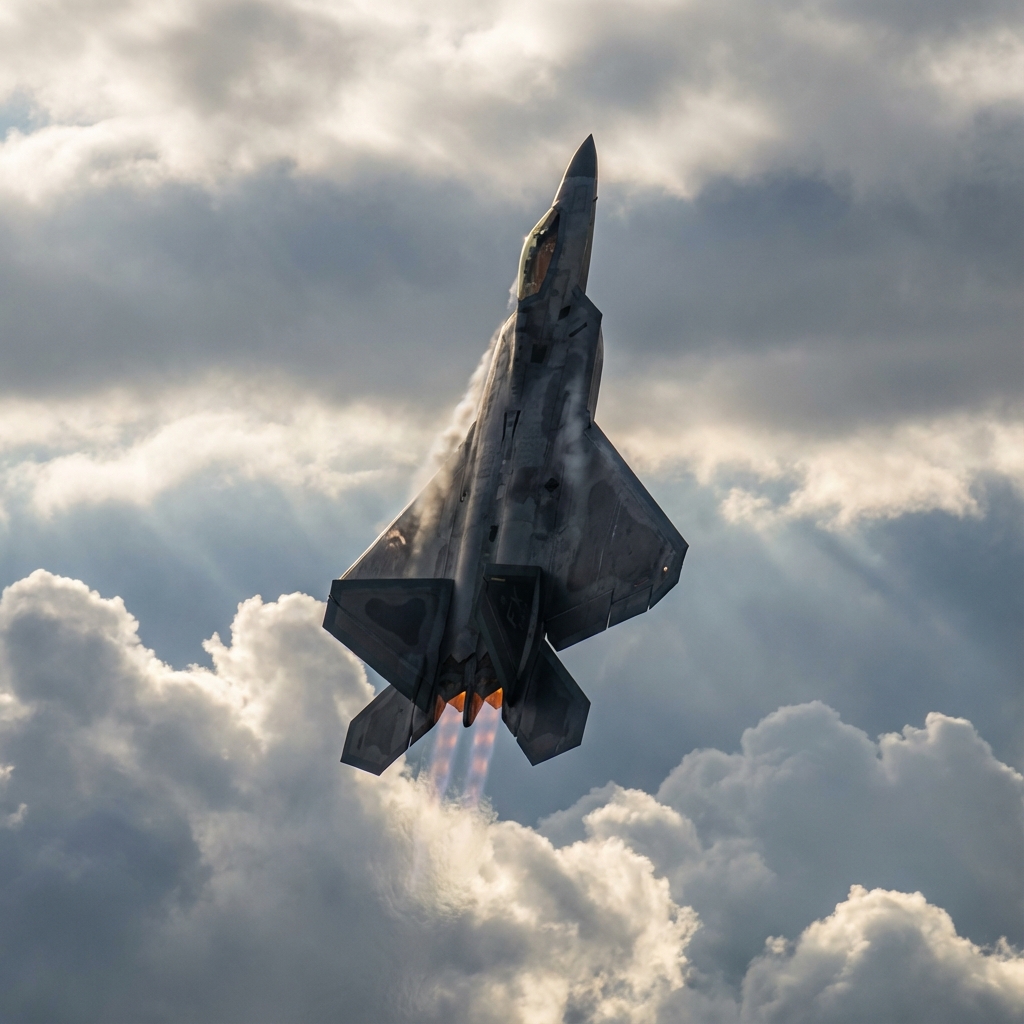
- T/W > 1.0: The engine wins. The vehicle can accelerate purely against gravity. It can point its nose 90 degrees up and accelerate vertically like a missile. (e.g., F-22 Raptor, Rockets).
Aviation: Agile vs. Efficient
The Passenger Jet (Boeing 737)
- Thrust: ~50,000 lbf
- Weight: ~170,000 lbs
- Ratio: 0.29
- Behavior: It needs a long runway to build speed. It climbs gradually. It is designed for maximum fuel economy over long distances.
The Fighter Jet (F-15 Eagle)
- Thrust: ~58,000 lbf (Afterburners)
- Weight: ~40,000 lbs (Combat weight)
- Ratio: 1.45
- Behavior: It can take off in hundreds of feet. It can climb vertically at 30,000+ feet per minute. It burns fuel at a rate that would empty a swimming pool in minutes.
Rocketry: Escaping the Gravity Well
For rockets, T/W isn’t just a performance stat for bragging; it’s a survival requirement. To leave the launchpad, T/W must be greater than 1.0.
- If T/W = 0.99, the rocket sits on the pad burning fuel until it gets light enough to lift.
- If T/W = 1.01, it lifts off agonizingly slowly (wasting efficiency to gravity losses).
- Ideal Launch T/W: Roughly 1.3 to 1.5.

The Staging Effect
Rockets cheat the T/W equation by Staging. As massive fuel tanks empty, the rocket drops them (along with heavy engines).
- Stage 1: Lifts the heavy fuel. T/W starts low (~1.4).
- Stage 2: Ignites high in the atmosphere. The rocket is now light. T/W jumps (often > 1.0 for orbital insertion).
- Burnout: Just before engines cut off, the T/W can be massive (5.0 or 6.0), pinning astronauts into their seats with crushing g-force.
Conclusion
Thrust to Weight ratio is the ultimate battle against Mother Nature. Whether it is a fighter pilot dogfighting at 20,000 feet or a Dragon capsule headed for the ISS, the math remains the same. You have to push harder than the Earth pulls.
? Frequently Asked Questions
What does a Thrust to Weight ratio greater than 1.0 mean?
What is the T/W ratio of a SpaceX Starship?
Why don"t passenger jets have high T/W ratios?
Does T/W change during flight?
What is the highest T/W ratio vehicle ever built?

About Azeem Iqbal
We are dedicated to providing accurate tools and information to help you optimize performance and understand power-to-weight metrics.