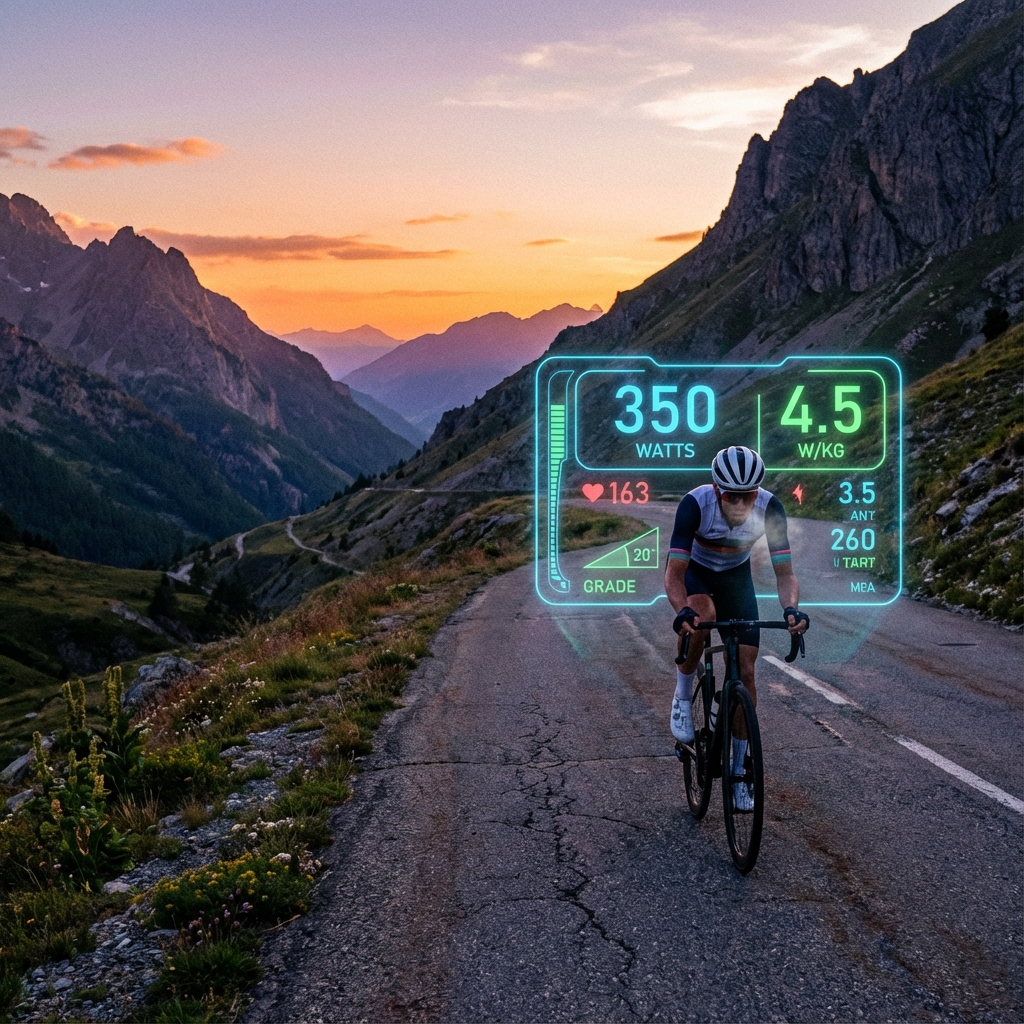
Understanding Power to Weight Ratio: The Ultimate Guide
Discover why power to weight ratio is the most critical metric for performance in cars, cycling, and athletics. Learn how to calculate it, interpret the numbers, and improve your own ratio.
Azeem Iqbal
Performance Analyst

Understanding Power to Weight Ratio: The Ultimate Guide
In the world of performance, whether it’s automotive engineering, competitive cycling, or aerospace design, one metric reigns supreme: the Power to Weight Ratio (PWR). While horsepower figures and peak torque values often grab the headlines, they tell only half the story. A 1000-horsepower engine might sound impressive, but if it’s propelling a cruise ship, it’s not going anywhere fast. Conversely, a modest 200-horsepower engine in a featherweight chassis can offer blistering performance.
This comprehensive guide will demystify the concept of power to weight ratio, explain how to calculate it across different disciplines, and explore why it is the single most important determinant of acceleration and climbing ability.
What is Power to Weight Ratio?
At its core, power to weight ratio is a measurement of actual performance potential. It is a calculation that allows you to compare the performance capabilities of different vehicles or athletes, regardless of their size.
It answers the fundamental question: “How much power is available to push each pound or kilogram of mass?”
In physics terms, Newton’s Second Law ($F = ma$) tells us that acceleration is force divided by mass. Since power allows us to generate force at speed, a higher power-to-weight ratio directly translates to greater acceleration potential. This is why a Formula 1 car, with “only” 1000 horsepower, can lap a circuit significantly faster than a semi-truck with similar power output. The F1 car weighs a fraction of the truck.
The Formula
The basic formula is deceptively simple:
$$ \text{Power to Weight Ratio} = \frac{\text{Power}}{\text{Weight}} $$
However, the units used can vary wildly depending on the industry and region:
- Cars (US/UK): Horsepower per Ton (hp/ton) or Horsepower per Pound (hp/lb).
- Cars (Europe/Australia): Kilowatts per Tonne (kW/t).
- Cycling/Athletics: Watts per Kilogram (W/kg).
- Aviation: Thrust to Weight Ratio (for jets) or Horsepower per Pound (for props).
How to Calculate Power to Weight Ratio
Calculating your PWR is a straightforward process, but accuracy is key. You need two precise numbers: your peak power output and your total ready-to-race weight.
For Cars and Motorcycles
- Find your Power: Locate the peak horsepower (hp) or kilowatt (kW) rating of your engine.
- Find your Weight: Determine the curb weight of the vehicle. For a precise calculation, this should include fuel, fluids, and the driver.
- Divide:
- Imperial: Divide Horsepower by Weight in Pounds (hp/lb). Multiply by 2,240 (UK Long Ton) or 2,000 (US Short Ton) to get Hp/Ton.
- Metric: Divide Kilowatts by Weight in Tonnes (kW/t).
Example: Imagine a sports car with 400 hp weighing 3,500 lbs.
- $400 / 3500 = 0.114$ hp/lb.
- $0.114 \times 2000 = 228$ hp/ton (US).
For Cyclists
For cyclists, the “Engine” is the rider. The standard metric is Watts per Kilogram (W/kg), typically based on Functional Threshold Power (FTP) — the highest power a rider can sustain for one hour.
- Determine FTP: Perform an FTP test (usually a 20-minute all-out effort minus 5%). Let’s say your FTP is 250 Watts.
- Measure Weight: Weigh yourself in your cycling kit. Let’s say you weigh 75 kg.
- Divide: $250 / 75 = 3.33$ W/kg.
This number is the holy grail for grimpeurs (climbers). On a steep gradient, gravity is the enemy, and every gram counts. A rider with a higher W/kg will theoretically ascend faster than one with a lower ratio, even if the second rider produces more total raw wattage.
Why It Matters: The Physics of Speed
Why should you care about this number? Because it dictates the character of the machine or athlete.
1. Acceleration
Acceleration is the most obvious beneficiary. In a drag race, the vehicle with the superior power to weight ratio typically launches harder. While traction, gearing, and aerodynamics play roles, PWR is the baseline potential. This is why a lightweight motorcycle with 200 hp can out-accelerate a 700 hp muscle car; the bike moves much less mass per unit of horsepower.
2. Handling and Agility
This is where the “Weight” side of the equation shines. A heavy car with massive power might accelerate well in a straight line, but it will suffer in corners. Mass has inertia; it resists turning. A lighter car with a lower power-to-weight ratio might actually be faster around a twisty track because it can brake later, corner harder, and change direction more readily. This concept is often summarized by Colin Chapman’s famous quote: “Simplify, then add lightness.”
3. Efficiency
A lighter vehicle requires less energy to move. Improvements in PWR achieved by weight reduction often lead to better fuel economy or longer battery range in EVs.

Industry Benchmarks: What is “Good”?
Context is everything. A “good” ratio for a family sedan is terrible for a superbike. Here is a general breakdown to help you analyze the numbers.
Automotive Benchmarks (hp/ton)
- < 100 hp/ton: Economy cars, city runabouts. Adequate for transport, leisurely acceleration.
- 100 - 150 hp/ton: Standard sedans, crossovers. Competent highway merging.
- 150 - 200 hp/ton: Sporty hatchbacks, entry-level sports coupes. Fun, responsive.
- 200 - 300 hp/ton: Serious sports cars (e.g., Porsche 911, Corvette). Very fast, push-you-into-your-seat acceleration.
- 300 - 500 hp/ton: Supercars (e.g., Ferrari, McLaren). Explosive performance.
- 500+ hp/ton: Hypercars and top-tier race cars. Mind-bending speed.
Cycling Benchmarks (W/kg at FTP)
- < 2.0 W/kg: Untrained or novice rider.
- 2.5 - 3.0 W/kg: Recreational enthusiast. Capable of club rides.
- 3.0 - 4.0 W/kg: Completed amateur. strong local racer.
- 4.0 - 5.0 W/kg: Elite amateur / Domestic Pro.
- 5.5 - 6.0+ W/kg: World Tour Professional (e.g., Tour de France winner).
Improving Your Ratio
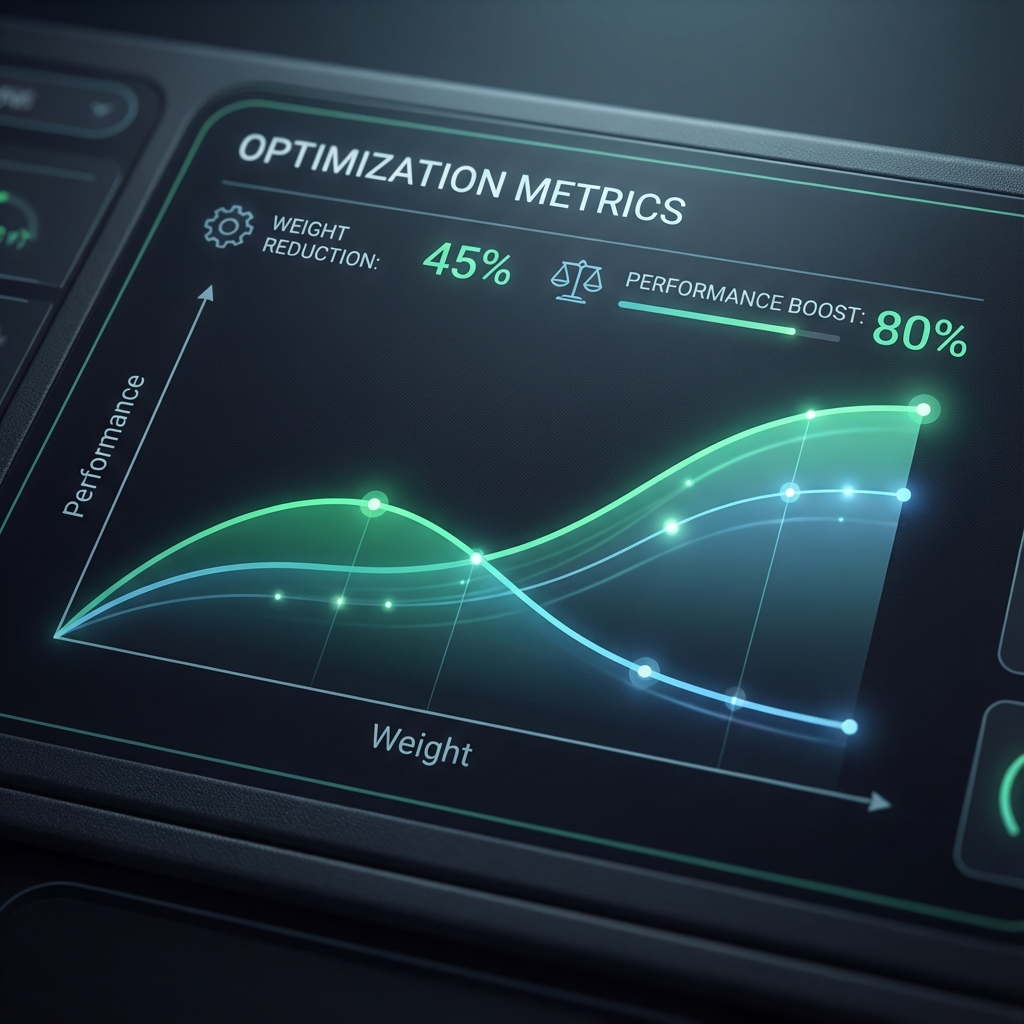
There are two levers you can pull to improve your power to weight ratio: the numerator (increase power) or the denominator (decrease weight).
Strategy 1: Increase Power
This is often the most fun but expensive route.
- Cars: Modifications like turbochargers, ECU tuning, intake/exhaust upgrades.
- Cyclists: Interval training, strength work, and consistent mileage to boost aerobic capacity and FTP.
Strategy 2: Decrease Weight
This is often the most efficient route (“free speed”).
- Cars: Removing back seats, using carbon fiber body panels, lightweight forged wheels, swapping to lighter batteries. Every 10 lbs saved is equivalent to gaining ~1 hp in performance feel.
- Cyclists: Body composition management (losing fat while retaining muscle) and upgrading to lighter gear (carbon frames, lightweight wheelsets).
The Golden Rule
The best approach is usually a combination of both. However, weight reduction often has compounding benefits—better handling, less wear on brakes/tires, and better efficiency—that simply adding more power cannot replicate.
Conclusion
Power to weight ratio is more than just a number; it’s a philosophy of performance. Whether you are tuning your track car for the weekend or training for your next Gran Fondo, understanding and optimizing this metric is the key to unlocking true speed. Don’t just chase big horsepower numbers or focus solely on being light; aim for the perfect balance where every unit of power is used effectively to move mass.
Use our calculators to check your current stats, set goals, and track your progress as you build a faster, more efficient machine—or become one yourself.
? Frequently Asked Questions
What is a good power to weight ratio for a car?
How do you calculate power to weight ratio?
Is a higher or lower power to weight ratio better?
What is a good watts per kg for cycling?
How does power to weight ratio affect acceleration?
Can you improve power to weight ratio without adding power?

About Azeem Iqbal
We are dedicated to providing accurate tools and information to help you optimize performance and understand power-to-weight metrics.